- Case story
Clean cooking as-a-service
EcoSafi combines a modern gasification stove and pellet fuel with an innovative business model to expand clean cooking in Africa.
“People don’t cook over charcoal because they like it. They use it because it is available and they can buy a little every day,” explains Jordyan Woodley, CEO and Co-founder of EcoSafi, the Better Cooking Company. “Our stove is the best on the market in terms of design and pricing and covers a greater range of cooking needs. The biggest barriers to clean cooking are inaccessibility and the lack of customer centred functionality.”
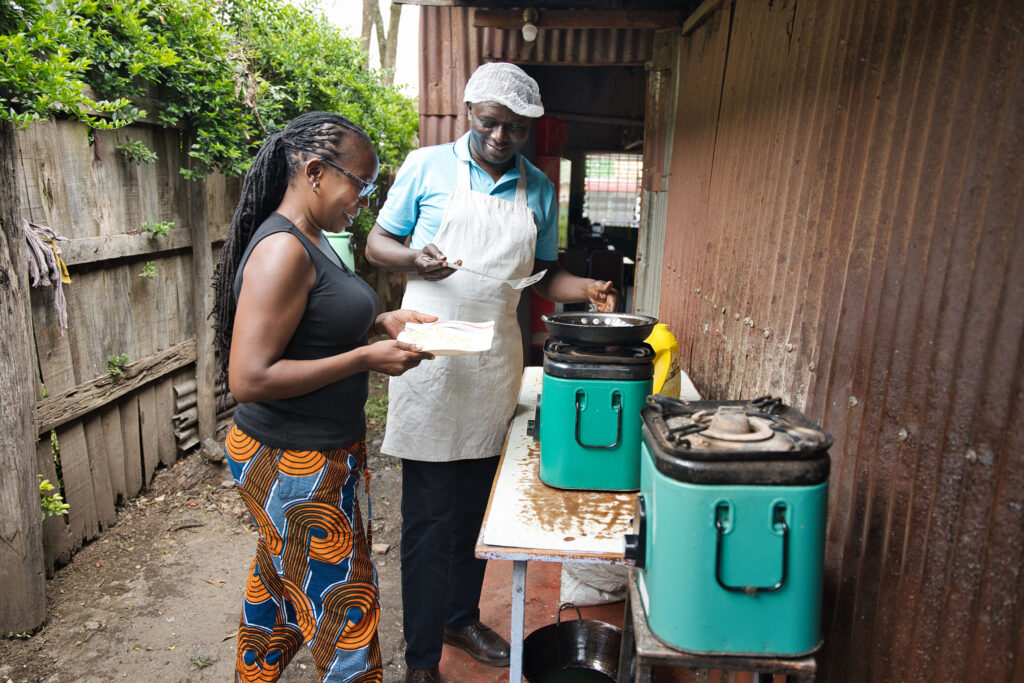
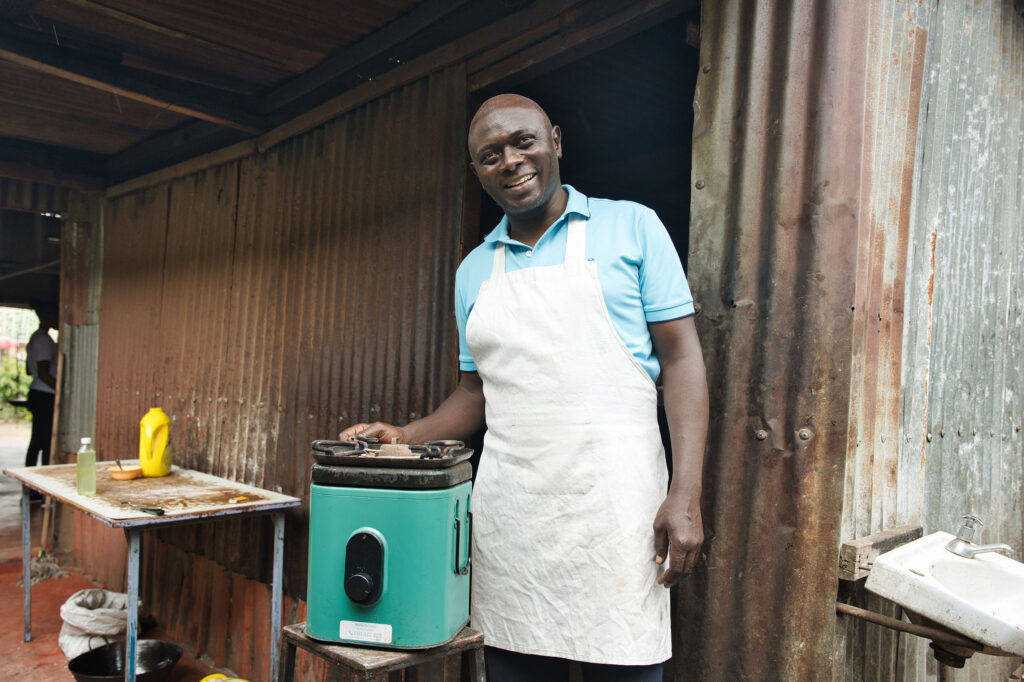
EcoSafi has developed the high-tier biomass stove, which uses biomass pellets for fuel. The stove itself is too expensive for many families to purchase outright, so the company uses a subscription model. Customers pay for the pellets and receive free access to the stove, similar to an as a-service (aaS) offering.
MCFA has offered the company up to EUR 1.5 million, primarily in results-based financing, which is expected to help mobilise additional co-financing. EcoSafi aims to provide 25,000 clean cooking solutions to 125,000 people in Kenya with MCFA support.
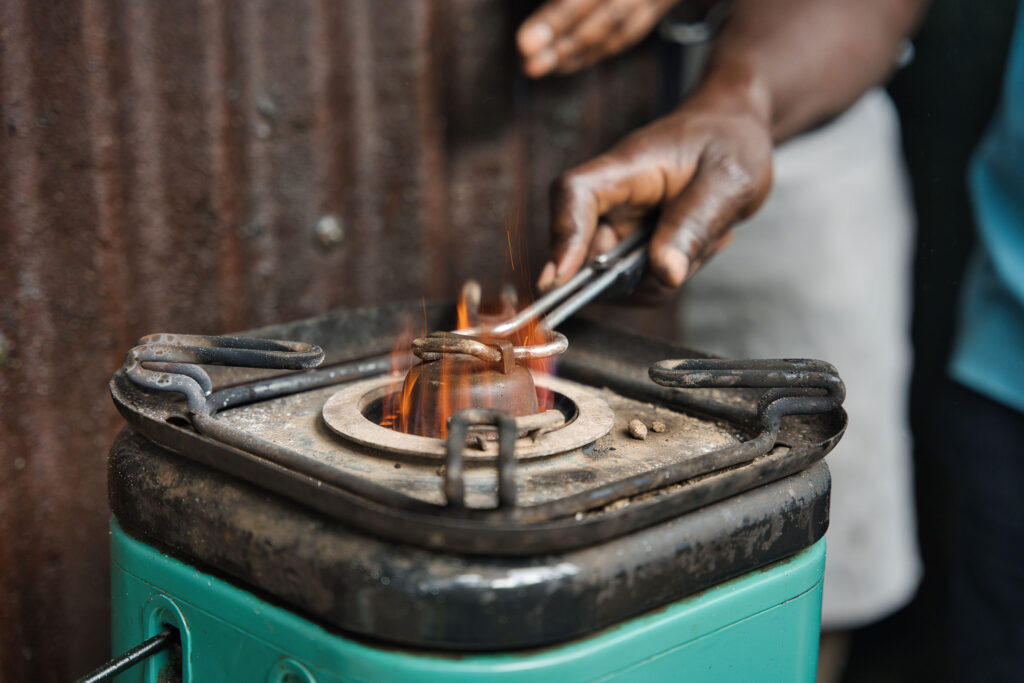
“The stoves burn a gas with a range of temperatures, just like LPG stoves,” Woodley continues. “Our fuel is the cheapest on the market, available in daily quantities, smokeless and can be purchased from distribution points located near to customers.”
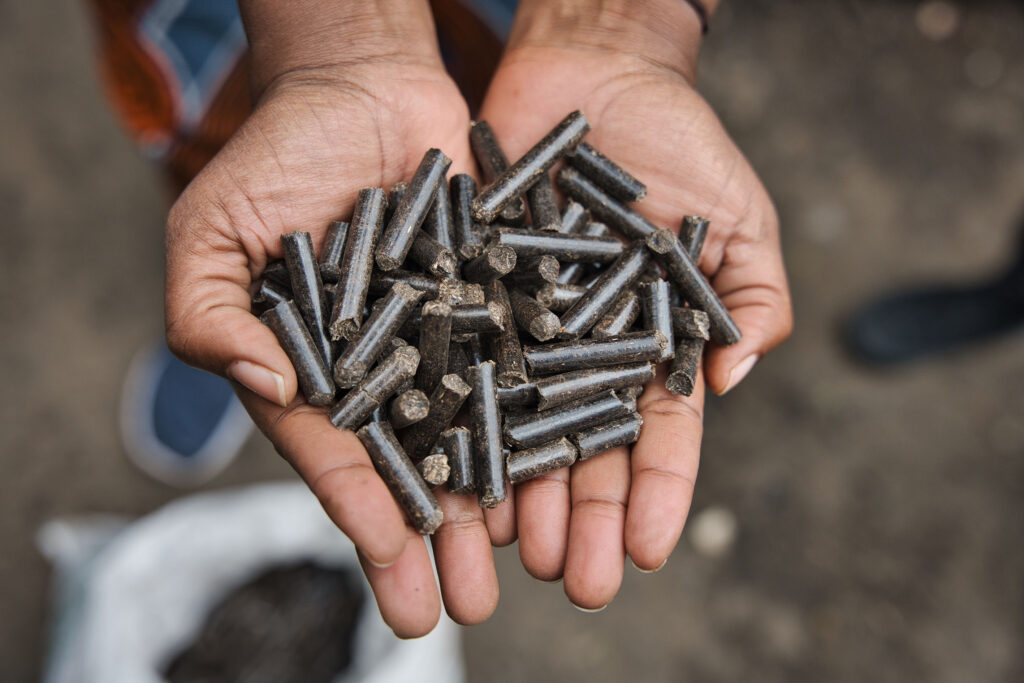
EcoSafi’s factories, which are powered by renewable energy, manufacture the pellets from agricultural waste such as sugarcane bagasse. Pellets are distributed through local dealers, who act like agents for EcoSafi.
“Stores might stock the pellets alongside their other merchandise,” says Woodley. “Yet I know of some women and church deacons who sell them from their homes to their neighbours as a part-time job. They can simply store the pellets in a spare room because they don’t need a fancy delivery system.”
“Another benefit of our stoves is that they don’t require a connection to the grid. Forced air gasification requires a battery to power the fans, so small solar panels are provided with the stoves in off-grid areas,” says Woodley. “Rural areas are some of the least electrified and use the dirtiest fuels. Our goal is for cooking with EcoSafi to become the new normal across the continent.
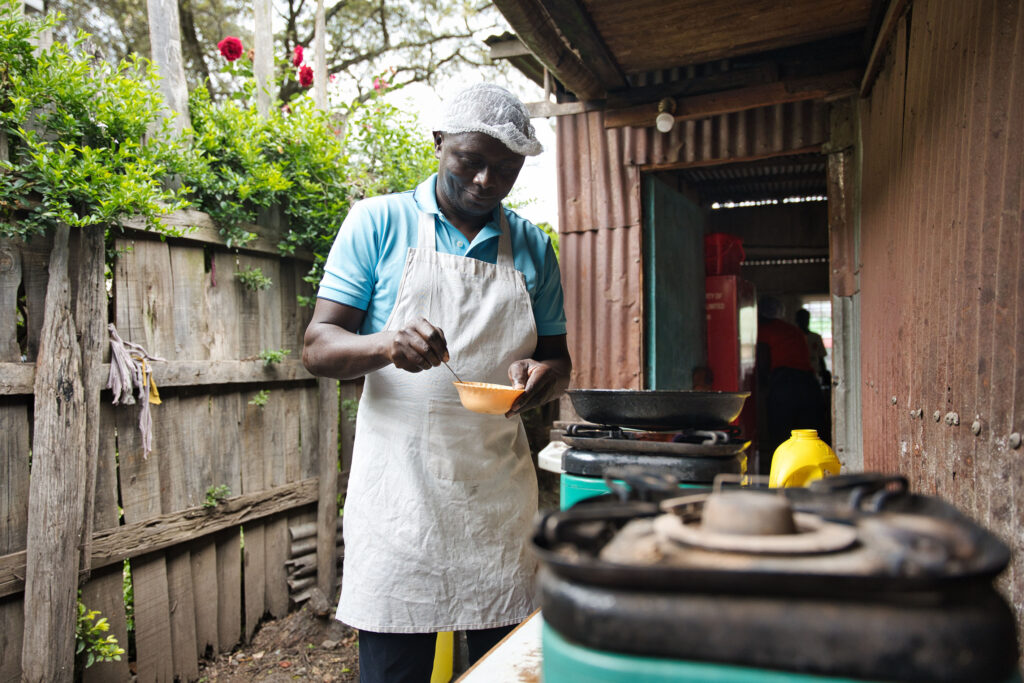
One of EcoSafi’s customers is Martin, the owner of a restaurant near the Mau Forest in Kenya’s Rift Valley. He previously used charcoal stoves, which covered the walls and roof of his restaurant with soot. He accepted an offer to try out a stove and liked it so much he now has four. Not only is Martin pleased with the improvement in air quality, he is happy because the pellets are cheaper and offer faster cooking times than charcoal. These benefits have attracted the attention of restaurant customers and staff, who are interested in acquiring their own stoves.
Biomass pellets
Biomass pellets can be cleaner and cheaper than charcoal, but much depends upon the supply chain. The biomass must be sourced sustainably and produced and distributed efficiently. Agricultural residues are generally considered excellent feedstock for biomass pellets, but alternative uses such as livestock feed and for soil rejuvenation must also be considered to accurately calculate their benefits.
For further information, please contact:
Aliona Fomenco, Senior Programme Manager, Nefco
aliona.fomenco@nefco.int, +358 10 6180 647
About EcoSafi
EcoSafi Kenya is part of the Better Cooking Company, an American parent company, which also has a subsidiary in Uganda and Zambia. EcoSafi is the exclusive licensee of the BetterStove. BetterStoves are 98% cleaner than charcoal and their fuel is half the price of charcoal and uses zero trees. EcoSafi was the first company to issue carbon offsets in Africa, under the strict new Gold Standard Metered and Measured Methodology, and it is the only ‘A-rated’ cookstove project according to ratings agency BeZero. Read more at www.ecosafi.com
- Clean Cooking
- Commercial customer
- Kenya
- Pellets